

SHAMROCK'S IRISH WOLFHOUNDS
At Shamrock's Irish Wolfhounds, we are dedicated to breeding and raising Irish Wolfhounds with the utmost care and respect. We pride ourselves on providing top-quality, well-socialized puppies to loving homes. Our breeding program focuses on producing dogs with excellent genetics, exceptional temperament, and robust health.
Our commitment to the well-being of our puppies doesn't end when they leave our care. We offer ongoing support and guidance to the new owners, ensuring a smooth transition and a lifetime of happiness for both the dogs and their human companions.


Though the exact details of the breed’s origin are unclear, it’s undebatable that the Irish wolfhound is an ancient breed. References to large Irish hounds date all the way back to 391 AD, when Roman statesman Quintus Aurelius Symmachus recounted receiving several as a gift.

As Irish wolfhounds gained popularity overseas, their numbers in Ireland diminished. The breed had become a status symbol—a popular gift between rulers and nobles. After the elk and wolves in Ireland were hunted to extinction, the Irish wolfhound nearly disappeared as well.
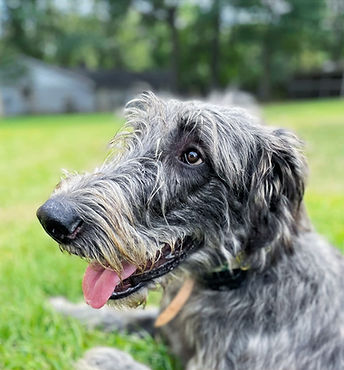
The tallest dog breed, and one of the largest overall, the Irish wolfhound is unofficially considered by many to be the national dog of Ireland.

Having outlived their purpose as hunters, today’s Irish wolfhounds are more commonly family companions. But although they’re known for being affectionate with human and animal family members, their massive size necessitates a certain degree of caution around children. These dogs mature slowly, so it may take several years for an Irish wolfhound to attain full size and outgrow youthful energy and temperament.

Over the centuries, this Irish hound earned its reputation as a fearsome warrior and a talented big-game hunter. Large enough to bring down elk and quick enough to pursue smaller game, these hounds were also known—as their name suggests—for hunting wolves.

The Irish wolfhound’s daily exercise needs are fairly high. Talk to your vet about easing a young Irish wolfhound into exercise—too much activity too early can have especially detrimental consequences for giant dogs like these. But, once their bodies are fully developed, many Irish wolfhounds excel as jogging or hiking partners. Others may be content with daily walks and access to a fenced yard.

Even when properly cared for, a healthy Irish wolfhound has a life expectancy of six to eight years. They’re at particular risk of the following ailments:
Gastric dilatation-volvulus (GDV): One of the most common gastrointestinal problems in Irish wolfhounds This potentially life-threatening condition occurs when the stomach fills with air—bloat, and twists, cutting off blood flow and causing a great deal of pain.

Dogs with GDV often have a distended belly and belch or retch unproductively (like they’re trying to vomit, but can’t). They may also drool, have a hard belly, be in pain when their belly is touched, or show signs of distress like panting. If you notice any signs of this illness, get your dog to a vet immediately—it’s a medical emergency.

Keep in mind that physical exercise is only part of the equation—mental stimulation is equally important for Irish wolfhounds.
Irish wolfhound owners often describe their dogs as giant puppies who don’t act their age.
Giant breeds like the Irish wolfhound tend to have shorter average lifespans than smaller dogs.

Trim your Irish wolfhound’s nails regularly; check their ears weekly and clean them as needed. Daily toothbrushing, complemented by annual dental exams and occasional professional cleanings, will help keep your Irish wolfhound’s teeth healthy.

Given the wiry texture of the Irish wolfhound’s coat, its appearance has a slightly unkempt appeal. You should brush your Irish wolfhound’s coat weekly to remove loose hair and dirt, but you probably won’t need to bathe them more than once every month or two unless they get visibly dirty.